If you're an agency owner, IT company, or freelancer with existing clients, there's a growing demand for WhatsApp CRM extensions. This guide covers the Chrome extensions that actually let you earn — through affiliate programs or white-label reselling.
Every small business today — real estate agents, e-commerce stores, coaches, clinics, restaurants — relies on WhatsApp to communicate with customers. But managing hundreds of chats without a system is chaotic.
That's exactly what a WhatsApp CRM extension for Chrome solves: it adds contact management, bulk messaging, AI chatbot, sales pipeline, and automation directly on top of WhatsApp Web through a simple Chrome extension. No separate app, no API setup — just install and go. If you've been searching for the best WhatsApp extension for Chrome that also lets you earn as an agency, you're in the right place.
The demand for these WhatsApp CRM extension tools is real — and growing. If you already have clients (as an agency or freelancer), your clients likely need a WhatsApp CRM extension for Chrome too. This creates a real opportunity for any WhatsApp CRM agency: instead of just recommending a WhatsApp CRM extension and walking away, you can actually earn from it.
There are two ways to do this:
1. Affiliate programs — Some WhatsApp CRM extensions offer a WhatsApp CRM affiliate program where you earn a percentage (typically 20%) of every client you refer. You share a link, the client signs up and pays the extension company, and you get a recurring commission. It's passive income with zero investment.
2. White-label — Instead of referring someone else's product, you get a white-label WhatsApp CRM rebranded entirely under your own company. Your logo, your website, your brand everywhere. You don't need to develop anything or set up any servers — the provider gives you the complete product under your brand, hosted and managed on their servers. Your client pays you directly for it.
In this guide, we've focused specifically on WhatsApp CRM extensions that offer one (or both) of these agency earning models. There are many great WhatsApp extensions out there (Cooby, WAWCD, Eazybe, WADeck, NizerChats, and more), but this article is specifically for agency owners asking: "which WhatsApp CRM extension for agency use can I actually earn from?"
📋 Disclaimer: Features, pricing, and program terms change frequently. This guide is based on publicly available information from official websites, Chrome Web Store listings, and affiliate program pages as of February 2026. Always verify directly on each extension's official website before making any decisions.
Right now, your agency probably earns from services like ads management, SEO, social media, or web development. You trade time and skills for revenue every month. But there's something most agencies overlook: the WhatsApp CRM extensions you recommend to clients are also a revenue opportunity. A WhatsApp CRM for agencies isn't just a tool to suggest — it's a product you can resell.
Think about it — when a client asks you "which WhatsApp tool should I use for bulk messaging?", you probably say "try WAPlus" or "check out WAWCD" or "use Lion CRM" and move on. The client signs up, starts paying that tool directly every month. You earned nothing from that recommendation.
Now imagine two alternatives:
Option A: You share an affiliate link instead. The same client signs up for WAPlus through your link, and you earn 20% of their subscription — every single month, for as long as they stay subscribed. Zero extra work.
Option B: You offer a WhatsApp CRM under your own brand. The client installs "YourAgency CRM" (not Lion CRM, not WAPlus — YOUR brand). They pay you $10-20/month per user. Your cost is $1-2.50/month per user. The difference is your profit.
Your service portfolio gets stronger. Instead of just offering ads and SEO, you now offer a complete package — digital marketing plus a business communication tool. Your client gets everything from one place. They don't need to go to three different vendors anymore.
You add WhatsApp CRM extension revenue without adding headcount. You're not building software or hiring developers. Whether through affiliate referrals or white-label, you're monetizing the WhatsApp CRM extension demand that already exists in your client base.
According to WhatsApp Business, over 200 million businesses use WhatsApp monthly. A WhatsApp Business CRM that adds bulk messaging, AI chatbot, and lead tracking right inside WhatsApp Web is something they'll gladly pay for. The WhatsApp Web CRM tool market is growing fast — and your clients are already part of that demand.
Out of the many WhatsApp Chrome extensions on the Chrome Web Store, here are the ones that let agencies actually resell WhatsApp CRM — either through affiliate/referral commissions or white-label reselling:
| Extension | Rating | Earning Model | Commission / Margin | Bulk Msg | AI Chatbot | CRM Features | Pricing (approx) |
|---|---|---|---|---|---|---|---|
| Lion CRM | ⭐ 4.9 | White-Label | You set your own price | ✅ | ✅ (3 AI Integrations) | Kanban, Flow Builder, Webhooks, Calendar & To-Do, Privacy Blur, Labels | $150 one-time + $1-2.50/user/mo • 7-Day Free Trial |
| WAPlus CRM | ⭐ 4.7 | Affiliate (20%) | 20% recurring permanent | ✅ | ✅ | Tabs, Pipeline, Templates, HubSpot/Salesforce/Zoho | Free / $12.99-$20.99/mo |
| WA Workflow | ⭐ 4.8 | Affiliate (20%) | 20% recurring | ✅ | ✅ | Kanban, ChatGPT, Translation, Tabs | R$21-46/mo (~$4-9) |
| WA Web Plus | ⭐ 4.4 | Affiliate | Commission (terms on site) | ✅ | — | Privacy tools, Auto-reply, Broadcast, Tabs | $11.99-$39.99/mo |
* Based on Chrome Web Store descriptions and official websites/affiliate pages as of Feb 2026. All these CRM extensions offer many more features than listed here — please check their respective official websites for the complete and latest feature list, as features and pricing update frequently.
Note: There are many other excellent WhatsApp CRM Chrome extension options in 2026 (WAWCD, Cooby, Eazybe, WADeck, NizerChats, WaTidy, etc.) that are great tools for end users. We haven't included them here because this guide focuses specifically on WhatsApp CRM extensions with agency earning programs. If you're looking for a general comparison of all WhatsApp extensions, that's a different article.
Let's look at each WhatsApp CRM extension in detail — features, what users say, and most importantly, how the WhatsApp CRM extension earning model works for agencies.
lioncrm.site • Chrome Web Store • ⭐ 4.9

Lion CRM is a Chrome extension that adds a complete CRM system on top of WhatsApp Web. Features include: Bulk Messaging, Custom Tabs, Labels, Kanban Board, Templates, Quick Reply, Chatbot Flow Builder, AI Bot (ChatGPT, Gemini, DeepSeek integrations), Follow Up funnels, Chat Toolbar & Translate, AI Integration, CRM Button, Smart Calendar & To-Do tasks, Number Validator, Status Automation, Webhooks, API Config, Scheduling & Transfer, Menu Features, and Privacy Blur.
All features are available in every plan — the white-label pricing only affects the one-time fee and per-user cost, not the feature set. Supports 9 languages.
Lion CRM also offers a 7-day free trial so you can test all features before making any purchase decision.
Agency Earning Model: White-Label (Full Rebranding)
Unlike the affiliate programs above, Lion CRM offers a completely different model. You pay a one-time fee + a monthly per-active-user cost, and you get the entire Chrome extension rebranded under your company. Your logo, your company name, your colors everywhere. Your client installs YOUR extension — they never see "Lion CRM" anywhere.
You set the price. You collect the payments. You can even create resellers under you who sell to their own clients. As a white-label owner or reseller, you get access to an admin panel to manage licenses, pricing, and reseller accounts.
Important: The admin panel is exclusively for white-label owners and resellers — to manage licenses, set pricing, and create reseller accounts. It's hosted on Lion CRM's servers, so you don't need to set up any server or hosting on your side.
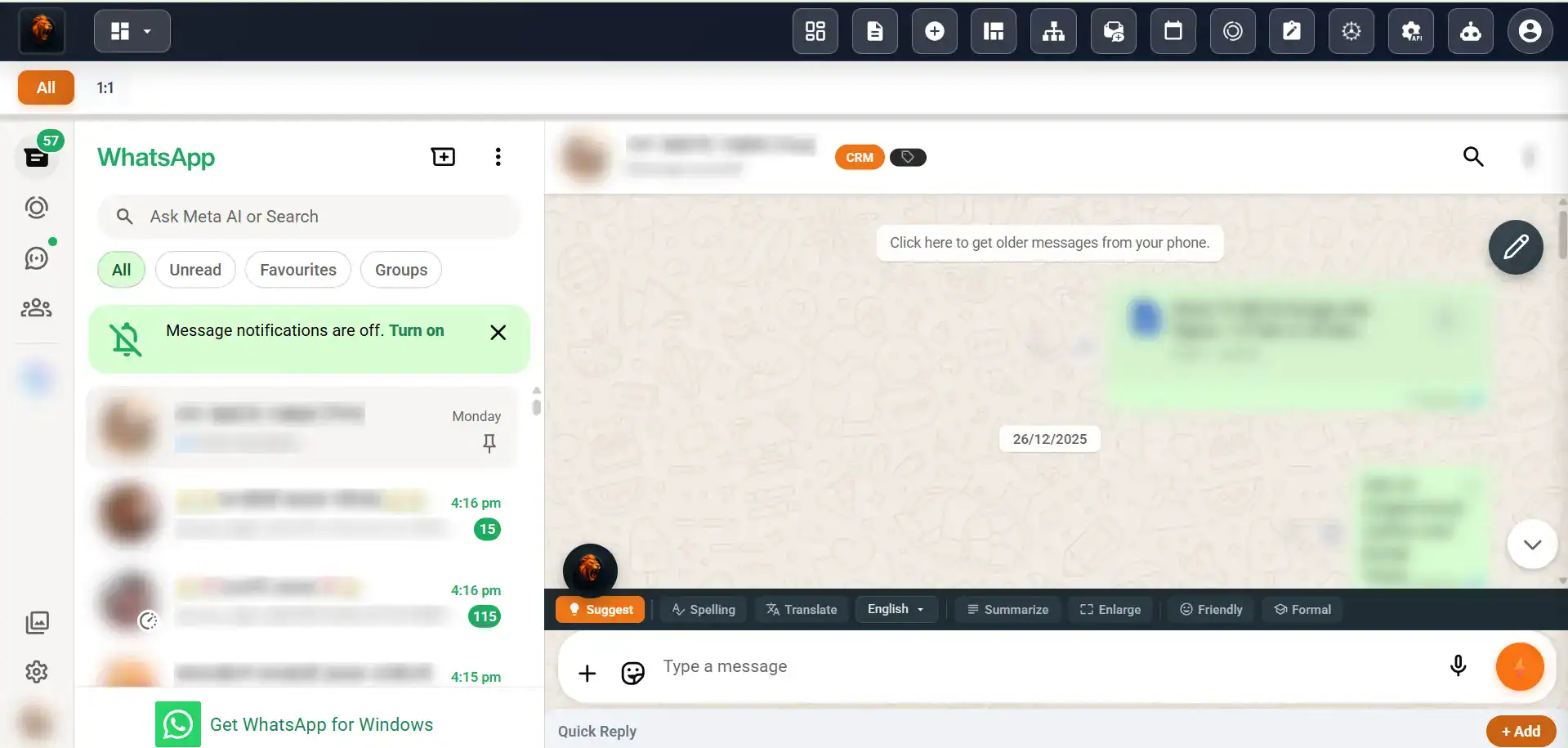
Lion CRM WhatsApp CRM Extension Dashboard — Kanban Board, Bulk Messaging & CRM Features
waplus.io • Chrome Web Store • ⭐ 4.7
WAPlus is one of the most popular WhatsApp CRM extension options globally with a large, established user base. It adds conversation management with custom tabs, DeepSeek AI chatbot, auto-reply, scheduled messaging, team workspace, CRM pipeline, broadcast messaging, and integrations with HubSpot, Salesforce, and Zoho CRM. Users praise the feature depth and CRM integration quality.
Agency Earning Model: Affiliate (20% Permanent Recurring)
WAPlus runs one of the most generous referral programs in the WhatsApp CRM space. You sign up as a referral ambassador, get a unique link, and earn 20% of every subscription fee permanently — as long as the referred user stays subscribed.
Their website even has an earnings calculator so you can estimate potential income based on plan type and number of referrals. They've reportedly paid out $190,000+ in cumulative affiliate cashbacks.
wawf.app • Chrome Web Store • ⭐ 4.8
WA Workflow is a fast-growing WhatsApp CRM extension for Chrome originally from Brazil, now expanding internationally. Features include Kanban CRM boards, ChatGPT integration for AI replies, tone adjustment, multilingual translation, custom tabs, scheduled messaging, and workflow automation. Clean UI and active development cycle.
Agency Earning Model: Affiliate (20% Recurring)
WA Workflow offers an affiliate program with 20% recurring commission on each referral. The sign-up process is straightforward — apply, get your link, share, and earn. Commission is recurring, meaning you earn for every month the referred user stays subscribed.
Affiliate Program • Chrome Web Store • ⭐ 4.4
One of the oldest and most established WhatsApp CRM extension tools for Chrome. WA Web Plus offers broadcasting, smart replies, exporting tools, click-to-chat generator, groups tools, scheduled messages, contacts synchronizing, and on Expert plan — CRM integration and webhooks. Has a loyal user base that values the feature depth. Multiple pricing tiers across Starter, Professional, and Expert plans.
Agency Earning Model: Affiliate Program
WA Web Plus runs an affiliate program where you can earn commissions on referrals. The exact commission percentage and terms are available on their affiliate portal. Being one of the oldest extensions, brand recognition helps with conversions.
Both models let you earn from a WhatsApp CRM extension. But they work very differently. Here's an honest comparison:
| Factor | Affiliate (WAPlus, WAWF, WA Web Plus) | White-Label (Lion CRM) |
|---|---|---|
| Investment | Zero — free to join | $150-$250 one-time + per-user monthly |
| Client sees | Original brand (WAPlus, WAWF, etc.) | YOUR brand name and logo |
| Who collects payment | The extension company | You collect directly from client |
| Your earning | 20% commission on subscription | Full margin (you set the price) |
| Client relationship | Owned by the extension company | Owned by you |
| Effort required | Low — just share referral link | Medium — manage clients + support |
| Scalability | Linear — more referrals = more income | Higher — create resellers under you |
| Risk | Low — platform changes terms, income drops | Medium — investment needed, but you own the business |
| Best for | Passive income alongside agency services | Building a WhatsApp CRM extension business under your agency brand |
Both models are valid. Affiliate WhatsApp CRM extension programs are perfect if you want passive income with zero investment. A white label WhatsApp CRM makes sense if you want to build a branded product and are willing to invest time and a small upfront cost. Some agencies even do both — affiliate for casual recommendations, white-label for their core offering.
Let's compare the two WhatsApp CRM extension earning models with the same number of users — 50 clients:
You refer 50 WhatsApp CRM extension users to WAPlus Pro plan at $17.99/month each. WAPlus collects $899.50/month total. You earn 20% = $179.90/month. This is genuine passive income with zero investment. The WAPlus earnings calculator lets you estimate this based on different plan types.
You pay $150 one-time for the Starter plan. You sign up 50 users and charge them $15/month each. Your revenue: 50 × $15 = $750/month. Your cost to Lion CRM: 50 × $2.50 = $125/month. Your profit: $625/month.
The $150 one-time investment recovers easily — your first month's profit alone is $625, so the investment pays for itself within the first week of earning.
The math: Same 50 users — affiliate earns ~$180/month, white-label earns ~$625/month. That's roughly 3.5x more revenue with white-label. But affiliate requires zero investment and zero client management. Choose based on your business model and how involved you want to be.
For agencies interested in the white-label model, here's exactly what you get:
Your logo, name, colors on the extension. Clients never see Lion CRM.
Admin panel hosted on your own server. All data stays with you — not on Lion CRM's server.
White-label owners & resellers manage licenses, pricing & accounts. Hosted on Lion CRM's servers — zero server setup.
You → Resellers → End Users. Create resellers who sell under your brand.
Pay $1–$2.50/user to Lion CRM. Charge $10–$20+ to your clients.
Sell to clients globally — extension supports 9 languages.
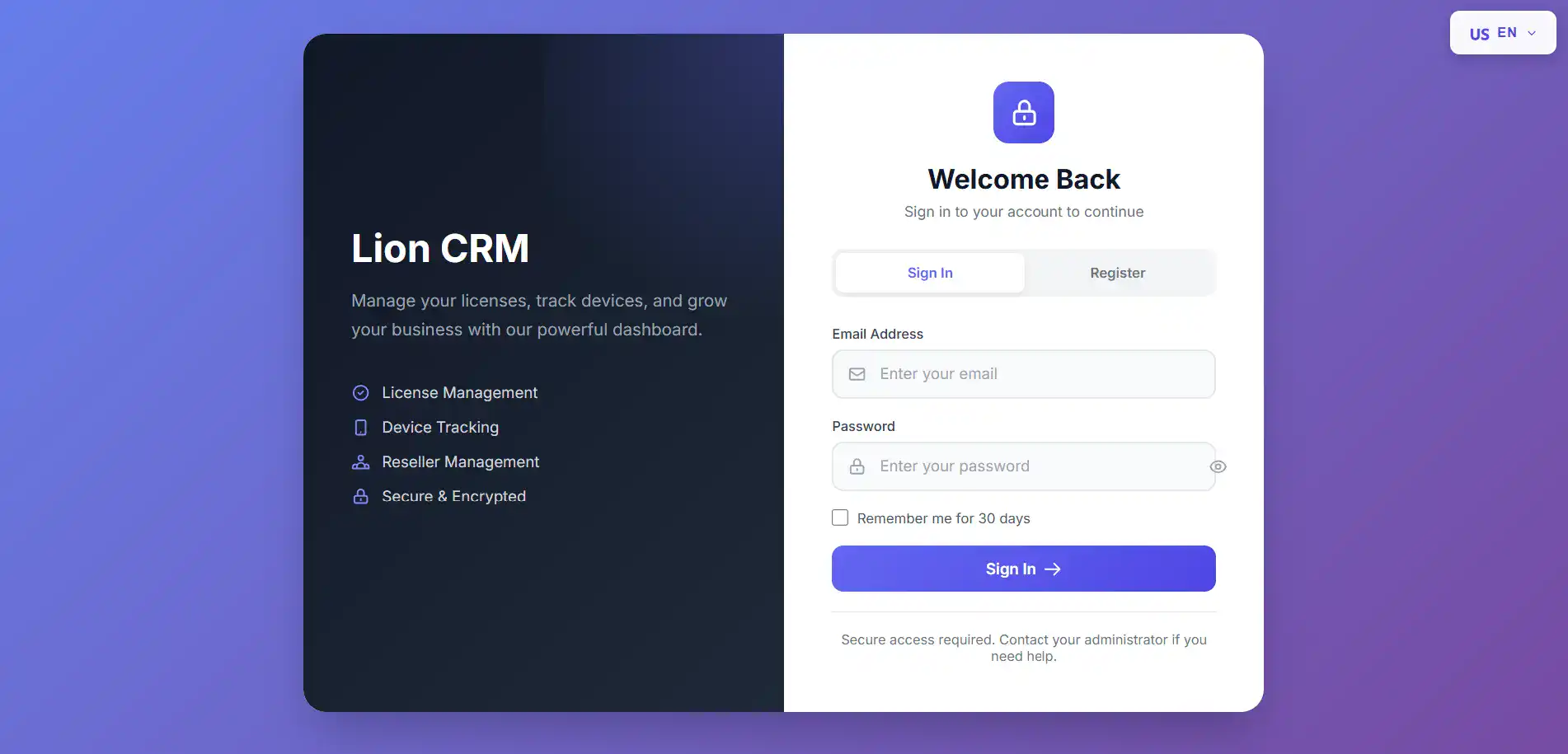
White-Label Admin Panel — For White-Label Owners & Resellers to Manage Licenses
One-time white-label fee + $1.00–$2.50 per active user/month (depends on plan). All features included in every plan — no feature compromise. One-time investment, lifetime brand ownership.
⏰ Act now — as new features are added and the platform grows, pricing will increase. Lock in the current rate today.
When WhatsApp pushes updates, we update within 72 hours. Your business never stops.
Starter or Enterprise — same priority, same response time. No tiered treatment.
You suggest features, we build them. This is a partnership, not a vendor relationship.
All four WhatsApp CRM extensions in this guide for agencies offer genuine earning opportunities for agencies. Choose the best WhatsApp CRM extension for your agency based on what fits your business model:
For passive income (zero investment): Join the WAPlus affiliate program or WA Workflow affiliate program. Start referring today, earn 20% recurring.
For building a branded CRM business: Try Lion CRM's 7-day free trial. Evaluate the features, test the admin panel, then decide if the white-label model works for you.
Interested in Lion CRM White-Label?